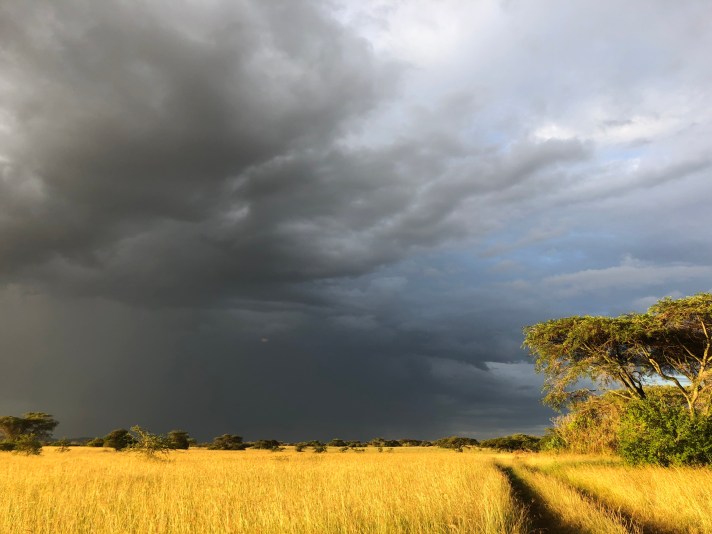
This year has been full of both success and challenges, we received 792mm of rain which is below average for the farm, this really highlights the importance of our holistic approach of minimum tillage and crop rotation.
Crops
Overall our arable activities have been limited due to the low rainfall. We had a disappointing season with another failed maize crop. However, our bush beans (Chelelang and KK8) were more successful with good crop yields for seed, however due to the sporadic rain we had to limit the area under cultivation. Demand for Leldet seed remains very high.

The Leldet sorghum E6518 produced a good silage crop, with a total of 805 tonnes (combined sorghum and grass silage) in storage to ensure we can get through what we expect to be a punishing 2022/2023 dry season.
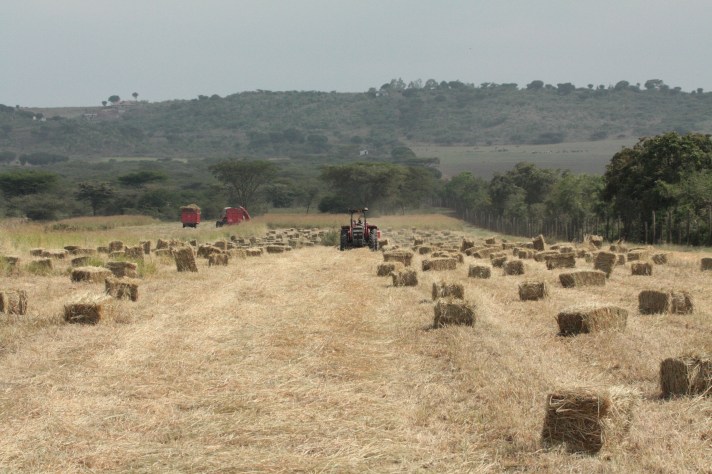
Our Boma Rhodes Grass continues to be a key part of our rotation, the fields produced well with 8 tons of grass seed produced for Kenya Seed Company – which had a record germination rate – and hay bales being sold directly off fields due to high demand with the continuing drought across Kenya.
Product Development
We are committed to working with partners in industry, government and research to improve the crops varieties and practices in use – especially in marginally arid agriculture – to improve food security in Kenya and beyond.
Leldet is a member of the Kenya Bean consortium, which is working to engage CIAT (the International Centre for Tropical Agriculture) to help release bean varieties under the Seed Harmonization Agreement, pending the supply of data to KEPHIS (the Kenya Plant Health Inspectorate) to enable release of new varieties. The delay directly results in lost seasons for farmers for whom these improved seeds could boost yields and incomes. As we wait for this to be resolved, we are continuing with the bean trials, data collection and harvesting.

We’ve continued our Soybean Trials into a second year with a Soybean kit imported from Zambia. Our Trial Manager, David Omosula has been working with Illinois University, collecting data in the field with a “QuickTrials” app, which improves the accuracy of data, especially for disease and pest identification. We’re working with Qualibasic to manage the release of the Leldet Soybean through NPT trials with KEPHIS.
The trials have expanded to include maize, this year we received AATF (African Agricultural Technology Foundation) maize parent lines (WH5375) and planted a small trial plot. The seed will be used for promotion and farmer awareness in the 2023 long rains with the intention of starting to sell seed in the 2023 short rains.
In 2021 we trialled forage grasses from Alliance of Biodiversity, these continue to grow well and we have used splitting to propagate these grasses into larger plots, quite a labour intensive process! Our intention is to silage the plots in 2023 and start sharing these varieties of grass with our neighbours.
In partnership with Agri Experience we started promoting the Leldet small packs using standard seed which is an exciting project we hope to expand in the long rains 2023 with yellow beans and forage sorghum.
Livestock
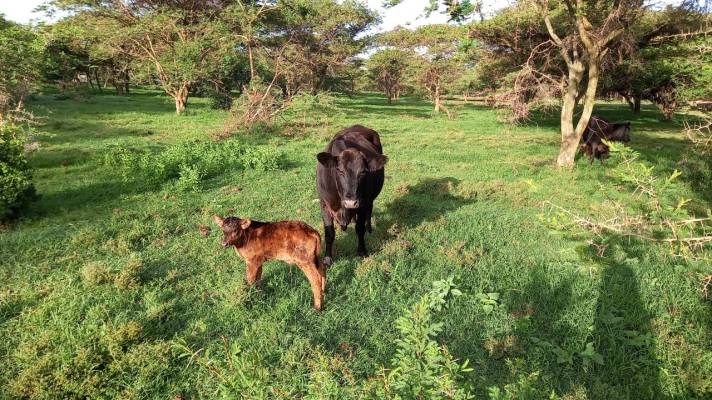
Our livestock operations have had a very successful 2022! This year we had 127 calves born, the mortality rate is down to just 7% and weaning weight at 9 months has been an average of 200kg. We’ve been fortunate to have limited disease challenges this year, having tightened up on hygiene and early diagnosis of illnesses. Despite the reduced rainfall this year, our silage feeding and rotational grazing have resulted in continued sales to Choice Meats with our cattle consistently grading between Premium and High Grade.

We’ve been improving the quality of our stock through intensive AI – artificial insemination – with both beef (Angus, Charolais and Simmental) and dairy (Jersey) genes. This has been enabled by both Harry and Nigel completing a DEFRA accredited AI course.
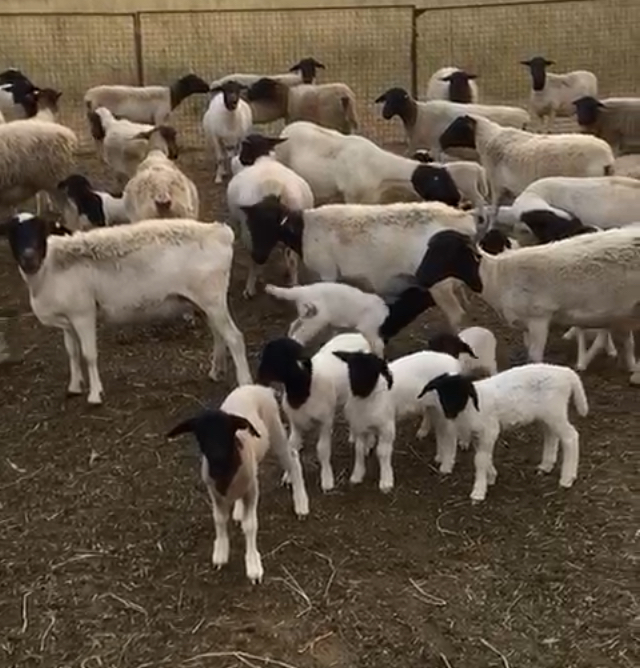
We transitioned the sheep into lambing seasonally by limiting access of our rams. This has helped enormously in controlling disease within the herd. The results of these efforts are clear – all of the lambs that have gone on to be sold have all been of the highest category, Premium!
Nature and Environment
Lolotoo the Elephant was officially named and collared thanks to Mark Goss at the Mara Elephant Project and KWS (Kenya Wildlife Service). We have been able to track Lolotoo when leaving the farm and ensuring on his return that the electric fence has been switched off.
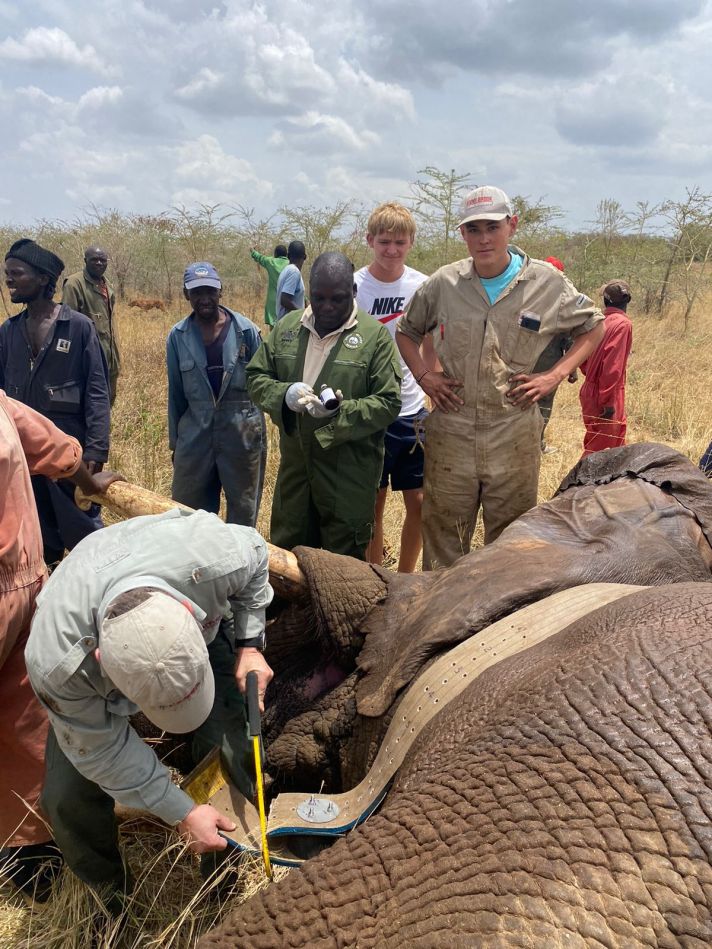
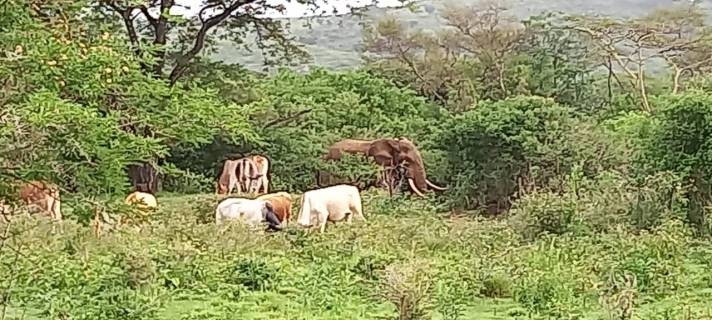
We were privileged in September to host two eminent professors who were researching Human and Animal conflict for their latest book. They were able to experience first hand the damage and humbling experience of hosting an elephant while managing a commercial farm.
Elliot has been busy keeping the Night Cameras up, which has produced extraordinary pictures and videos of wild pigs, striped hyena, caracal, and owls at water troughs.


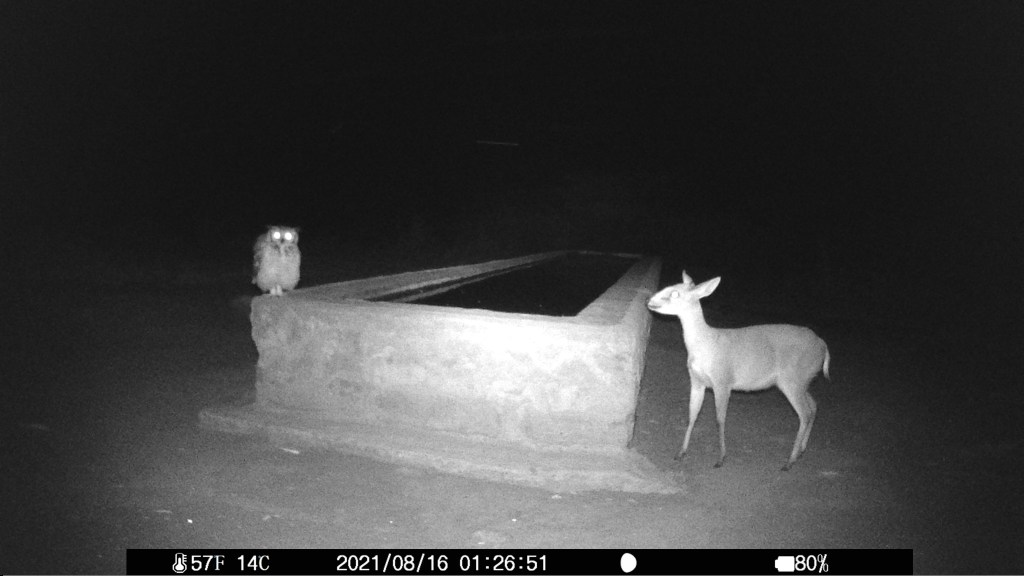
We’ve been increasing our Lantana clearing efforts, with both Harry and Elliot working with JCB. This has resulted in improved grazing and seems to be appreciated by the duiker and dikdik too. Elliot has also created water pans both for livestock and wildlife.

In 2022 we made a massive effort to increase the number of trees planted, both indigenous and fruit trees. We planted over 70 fruit trees, over 100 cyprus and gum trees, and started a nursery with over 300 indigenous acacia trees.
Water
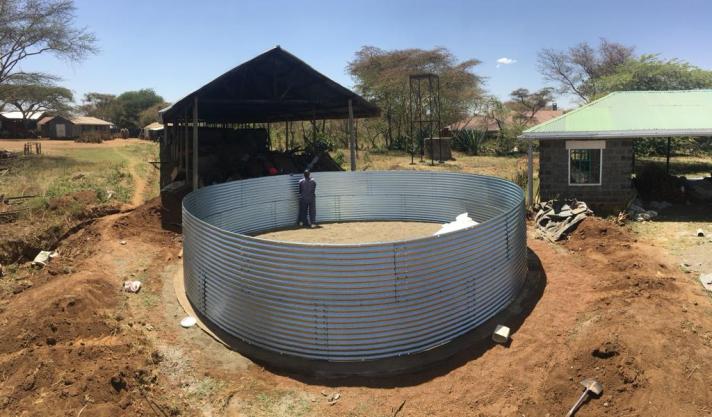
One clear lesson of the prolonged reduced rain has been the need to increase the efficiency of water consumption and maximise our water harvesting and storage. In partnership with road engineers we have diverted run off from the Ol’Rongai road via a large trench leading to an earthen dam. The cattle have been in the dam to help with puddling after the rain, this compacts the ground and we hope this dam will be a good water storage resource.

All of the stores have been fitted with guttering and tanks, this has proved invaluable not only with the water storage but also with erosion.
The directors took the decision to try and drill a borehole having had two failed attempts in 2002. It was a heart stopping couple of months with the first hole completely dry, however with perseverance a second hole was dug and we hit water!! This is a very exciting moment for the farm! In due course we hope to start utilising this water after installing pumping and storage infrastructure, however it will be nontrivial as the water is rather warm at 61C!
Staff Training
Our greatest resource is the incredible team we work with every day. We’ve been investing in capacity building activities to support continued professional growth.
- Four members of the team completed a two-day Electric Fence course at Instarect in Nairobi, resulting in better fence maintenance and the construction of temporary fences around the key crops to keep out the elephant.
- Five staff did a Red Cross first aid training in Nakuru.
- Harry and Elliot did a Captains Boat Handling course in Watamu which is necessary for compliance when using boats in Lamu.
- Three members were trained in computer skills, with our management team transitioning to being able to conduct more day-to-day admin.
Lamu
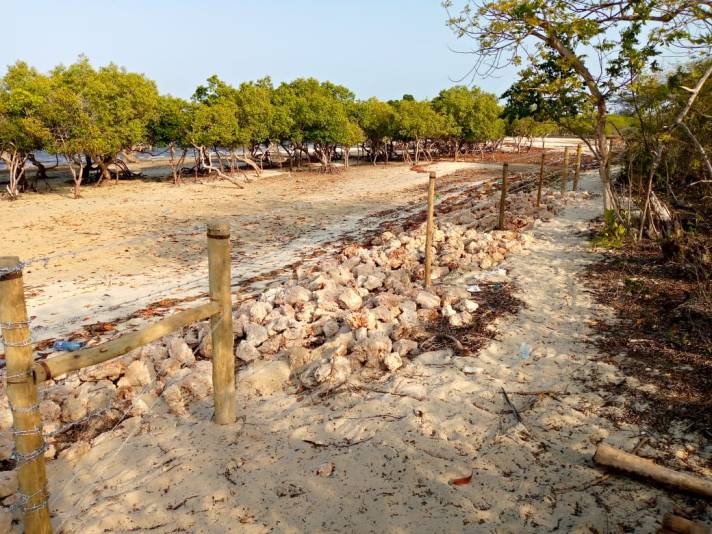
Harry, Rono, Maurice and Philip spent a month at the beginning of the year building the fence around the Lamu plot. This has reestablished the fence line and improved the security of the land. This will enable us to expand our fruit trees and protect the natural bush.
Looking Forward
The future is bright for Rajwera! We’ve come through a challenging few years with Covid and drought, and developed resilience and new focus on key priorities. In the future we will be upgrading our farm infrastructure to enable increasingly professional administration, mechanical maintenance and livestock management. We will be utilising internationally cutting edge software packages to improve the farms efficiency and productivity. Finally, we’re looking forward to building on the new water resources and continuing staff capacity building.
 Rajwera Farm