Crops
The beans planted earlier this year have come up and are doing exceptionally well, this year we’ve planted KK8, Chelelang and KAT B1, all for seed. These went in at a higher density than usual, resulting in good cover and reduced weeds. We are monitoring these crops closely to ensure they do not suffer from rust or other diseases before they are harvested in October to November.

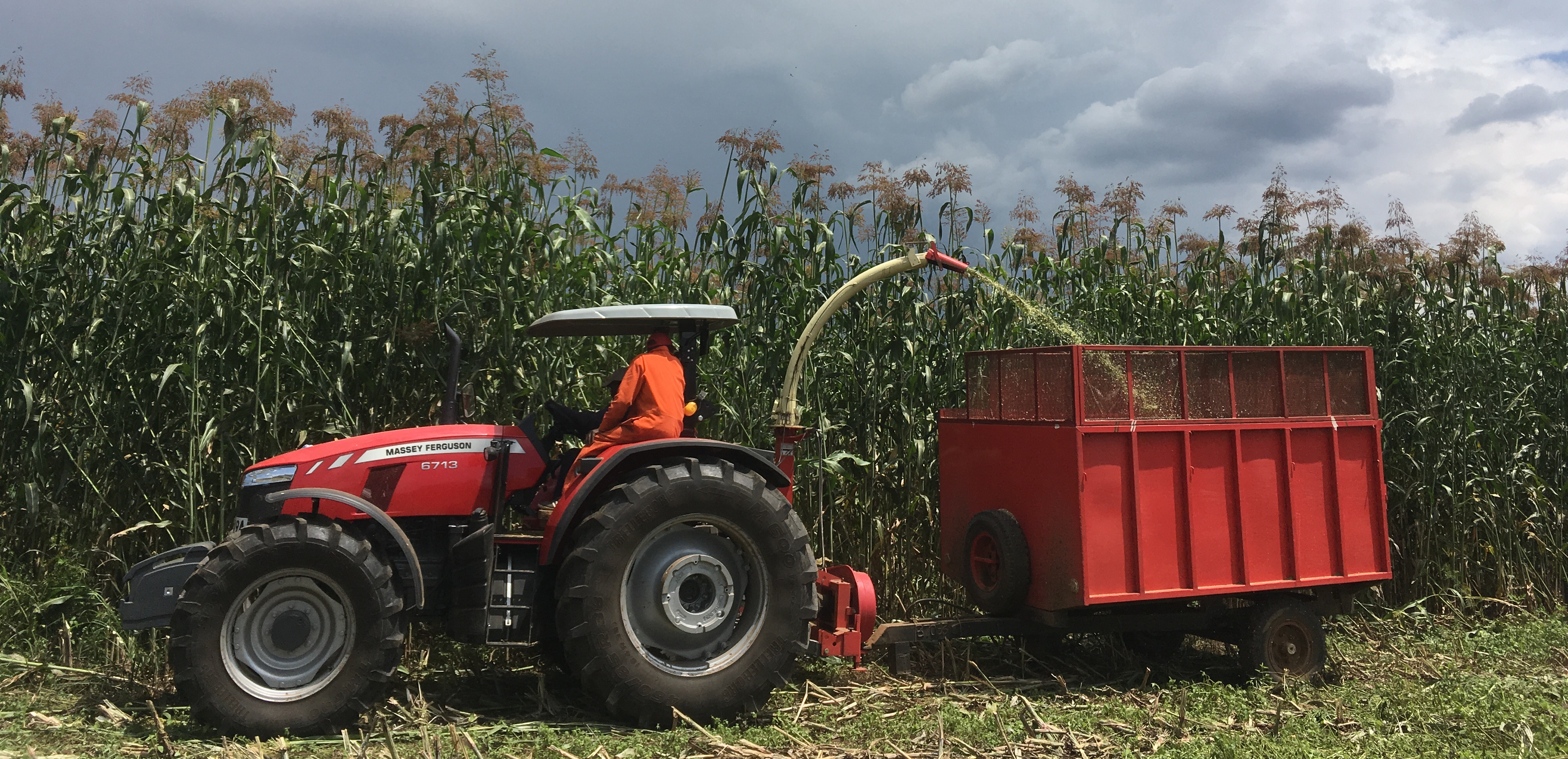
We have taken on a new Massey Ferguson 6713 tractor and a Noguiera silage harvester, this machinery’s inaugural task was to harvest our matured forage sorghum to produce silage for the cattle. On a typical day we were harvesting 40-50 tonnes of sorghum per day, this is made possible by the high biomass density of the sorghum.
Leldet’s forage sorghum (variety E6518) grows up to 15ft (4.5m).
We were also glad to welcome back our Laser tractor, which has been central to farm operations since we started in 1999 and received a major overhaul from FMD Nakuru. Affectionately known as “mama ya shamba”, the laser went right back to work digging the silage hole then compressing the sorghum to maximize the space of the hole and minimize oxidation in the fermentation process.

One challenge faced during this harvesting was our resident elephant, who has been enjoying the sorghum, particularly as he is able to hide within the crop – no small feat as he is particularly large! We are grateful for the support from KWS Nakuru, who enabled us to harvest the sorghum without the fear of a confrontation between harvester and elephant!

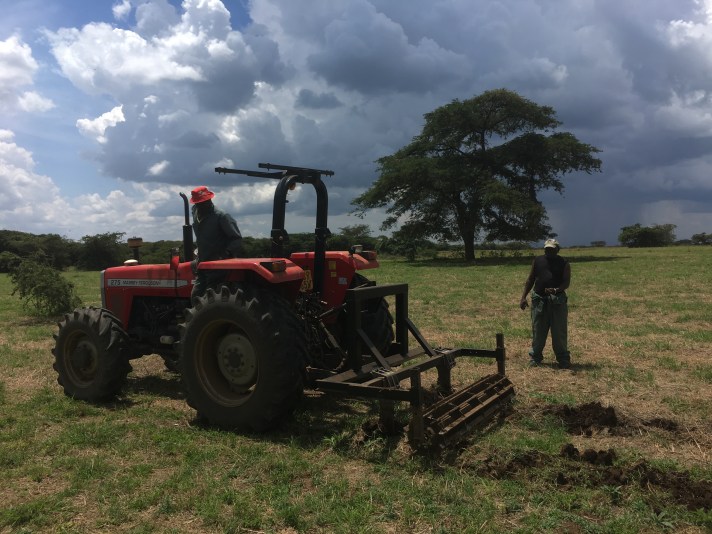
In preparation for the short rains we constructed a “shakorator” – a device with a few tines, designed to rip the soil to a depth of approximately 2 – 3 feet in order to aerate the soil and enable water to penetrate the compacted surface. This is a key step in restoring the soil’s productivity after it has been grazed by livestock.
Seed
Sales of beans continue to be strong in Bomet and Kericho counties, we have been receiving images and feedback from farmers, and as part of our after sales support have been following up with any issues and assisting with trouble shooting where crops have underperformed. Information and images will be posted to our “Farmer Diaries” page (coming soon).
Our most recently sorted and packed lots of seed continue to show excellent quality, with germination tests conducted by KEPHIS consistently above 95%.
Livestock
We have been fortunate over the last few months to have not faced any heavy disease burden, with only mild issues from the Lumpy Skin Disease (LSD) outbreak in the region. the cows and sheep are healthy and putting on weight. The steers are grazing a Rhodes grass field during the day and provided with Rhodes grass silage in the evening.

Covid-19
We are continuing to enforce the sanitation measures introduced at the beginning of the pandemic, including through production and dissemination of Leldet and Chemeron branded masks.

 Rajwera Farm
Good work Janey and Nigel, interesting that you have an elephant and the farm looking so transformed, Proud of you guys
LikeLike