Second Quarter 2021 Update

The rains kicked off in April this year, bringing much needed respite from the annual dry season. We haven’t received as much rain as we would usually expect, but this means we are really reaping the benefits of minimum tillage and diverse crops.

CROPS

This year we’re growing seed maize for Corteva planting into last year’s bean field with minimum tillage. The maize was planted in a MMFFFFFF formation, with one of the male lines planted 1 week before the rest of the lines. In order to accurately plan the lines, we’ve installed satellite assisted steering, this is another step towards increased accuracy and efficiency on the shamba. The maize went into last year’s bean field, with no tillage. Minimum tillage – or as in this case no tillage – has a myriad of  benefits chiefly moisture retention (as we’ll explain in an upcoming dedicated post).

Maize planted into the previous season’s bean stubble.

We’ve also planted beans, which went into a field that was previously grazed. The bean varieties planted are KK8, KAT B9 and Chelelang. These will be for seed in the short rains growing season, the demand for high quality Leldet seeds still outstrips production. The bean field was chiseled – this is a key component of our conversation tillage and crop rotation programs – chiseling reverses compaction caused by grazing by cattle and subsequently by sheep, and helps control established weeds.

Beans, the yellow areas show weed kill off.

Excitingly, we’re conducting several trials this year. 

We have planted 38 varieties of Soya Bean which are all part of the PanAfrican Soya Bean Variety Trials. This program seeks to address the relative lack of investment in research, breeding and deployment of non-GMO Soybeans across Africa.
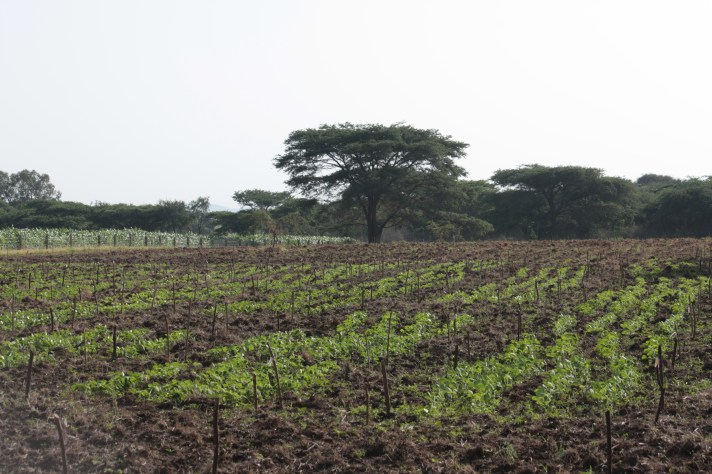
Soya bean trials!

In addition, we have also planted bean trials which are part of the Kenya bean consortium. We’ve planted 14 bean varieties in our trials, these have been released in two other East African countries, and the objective of the consortium is to leverage the seed harmonization agreement to fast track release of the varieties to the Kenyan market. The overall aim of the consortium is to create a platform for collaboration between seed companies with the end goal of increasing the availability of good varieties and high quality seed on the market.

Bean trials!

We’ve also planted trials for forage crops, these could become critical components of our rotation program, the varieties planted include Brachiaria and Crotalaria, supplied by Alliance of Biodiversity International and the International Center for Tropical Agriculture (CIAT).  

All of the trials are aligned with Leldet’s core objectives of ensuring appropriate varieties are available to customers who need them and are of a high standard. 

Other crops planted this year include sorghum – Leldet’s E6518 forage sorghum variety and Boma Rhodes grass, for a mixture of seed and silage. The first silage harvest is well underway.
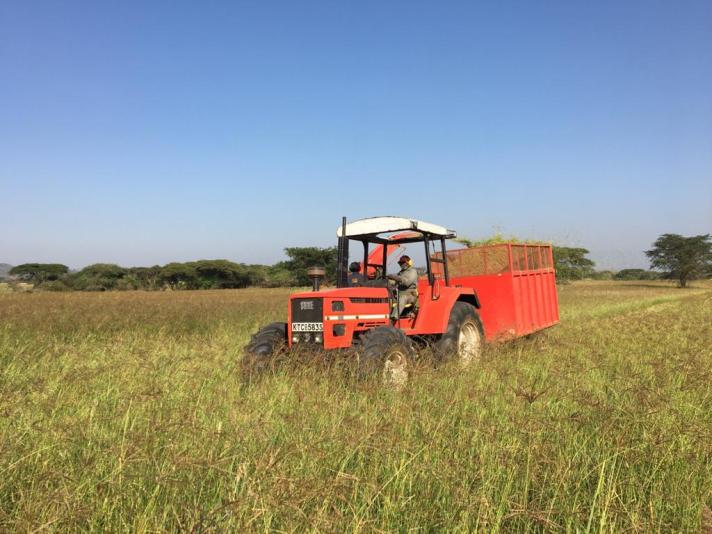
Silage harvesting – Boma Rhodes grass.

LIVESTOCK

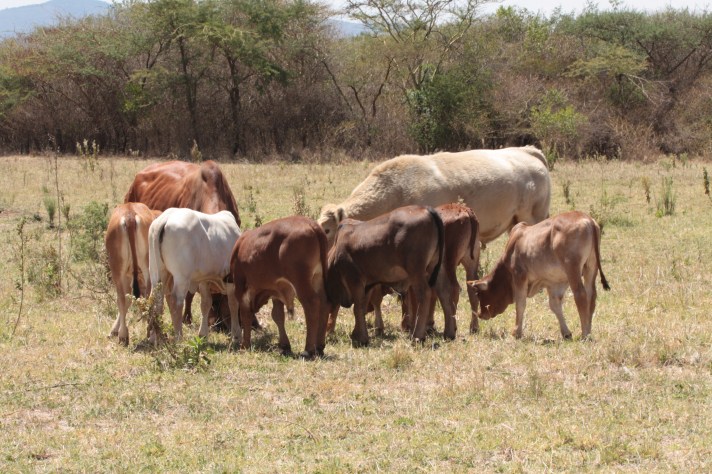
With all of the new pasture the cows are looking very good. The steers are still receiving silage, and showing very positive weight gain. With each new group of weaners we are increasingly appreciating the visible success of selective breeding, with the end result of larger, healthier animals.

Calving sequence – a Boran – Angus/Charolais cross comes into the world and is greeted by her father and some curious calves!

We are gradually phasing out Dorpers on the farm, if you are interested in purchasing Dorper sheep please feel free to contact us. The principal reason for this is that with a smaller herd we can refocus on best practice and high quality animals through careful breeding. There is also a chance that the sheep act as a disease reservoir for diseases that affect the cows, particularly Blue Tongue, which is quite lethal for calves as it results in swollen/rigid tongues which means they are unable to suckle or effectively swallow milk.

We’ve had prolific calving over the last few months.

LIFE ON THE FARM

The resident Elephant has left the shamba and so we have been catching up with fence fixing and generally clearing up after him. We are populating the website with more images and information about the farm – the most recent addition being our post about birds – click here to read it!

Immature Secretary Bird – we’ve had a breeding pair on the farm for a while.

We’ve also continued our clearing of Lantana camara (discussed in our Q1 2021 report).

Over all the past three months have been very busy with planting, but very successful too. We now wait for more rain to carry the crops over to harvest, and continue to adapt to the new normal under Covid-19. 
First Quarter 2021 Update

January, February and March are usually dry on the farm, and this year has been no different. While this puts pressure on grazing and increases the risk of fires, it also provides a respite in vegetation growth that allows us to get everything under control before the rainy season begins in April.

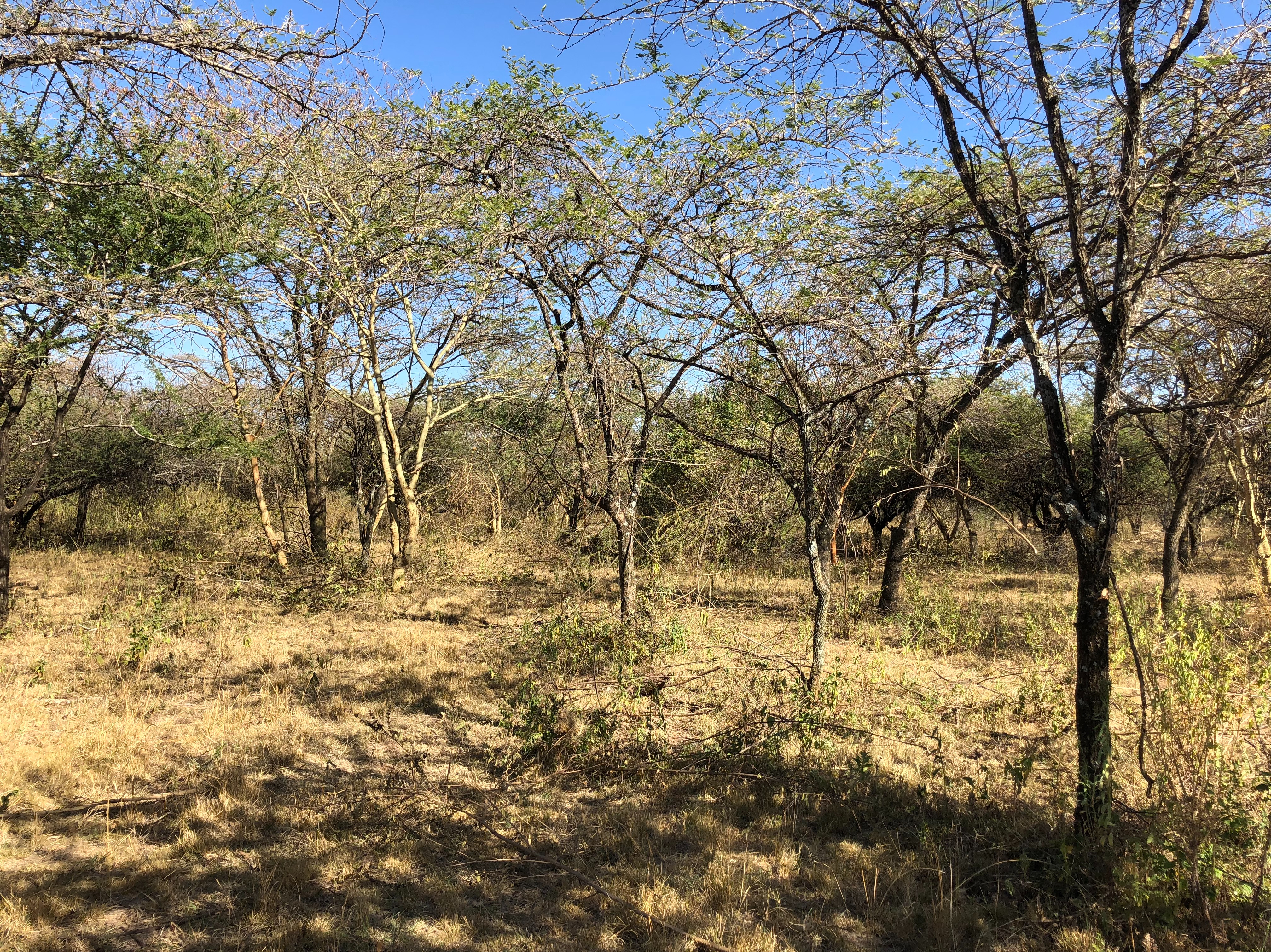
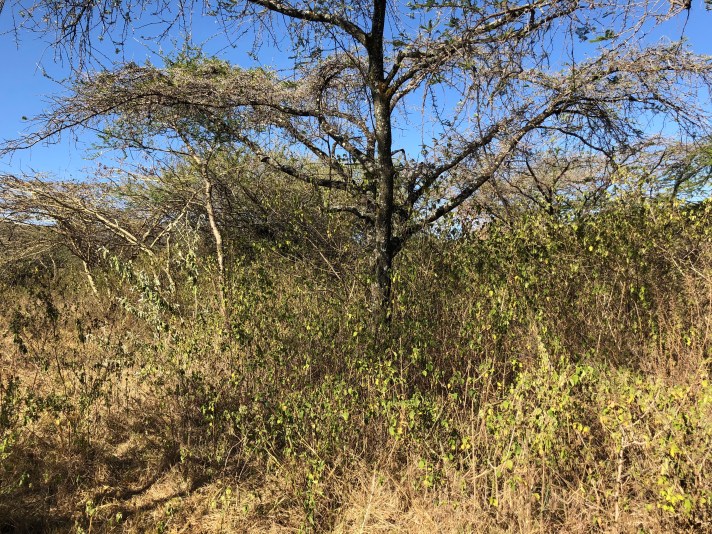
This quarter a real effort has been made to clear Lantana camara, an invasive plant that grows vigorously, including up into mature trees, smothering them. We’ve been removing lantana by hand from paddocks and conservation corridors in order to rescue the natural vegetation and also open up dense Lanata thickets to enable grass to grow for pasture.

Before and after clearing of Lantana camara.

Crops

We harvested beans in the last quarter of 2020, and have been busy sorting, dressing and packing these for sale. Sales really picked up in the Bomet area in March, and we anticipate this will continue as the rainy season gets under way. Our germination test results from KEPHIS were 96%. 

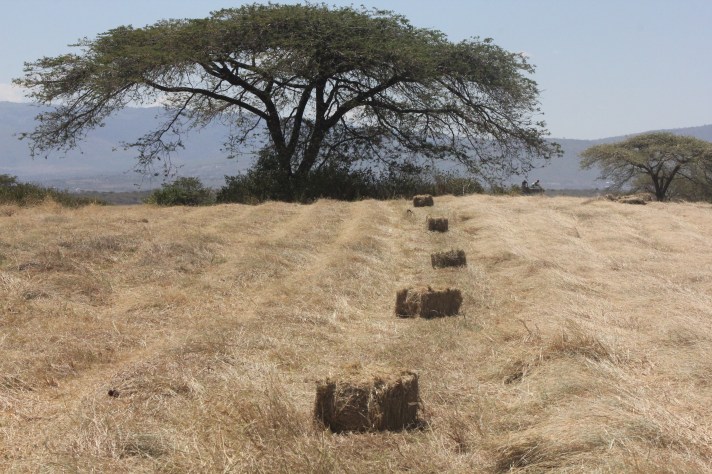
We’ve also been selling hay, so far this year we have produced and sold 20,895 bales of Boma Rhodes hay. The price has been low this year, but the sales are crucial for cash flow during the dry season.

Boma Rhodes hay bailing.

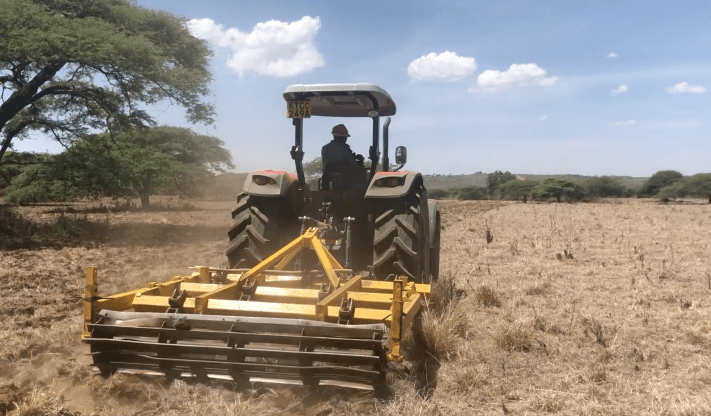
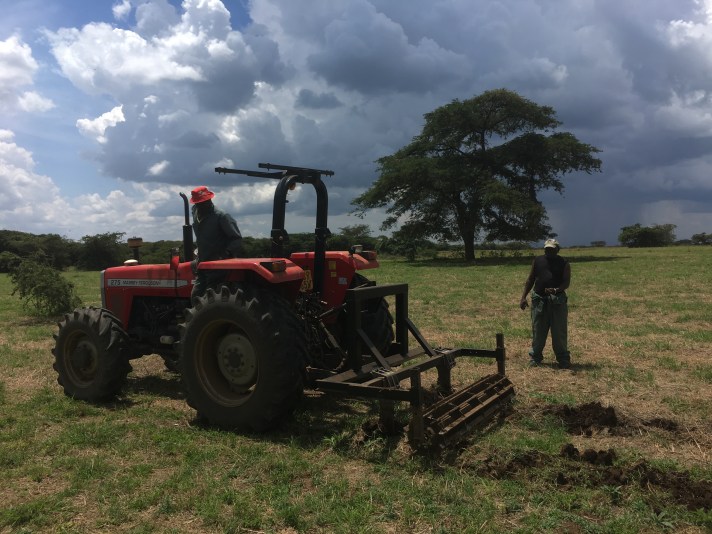
As we gear up for the rainy season we have been busy prepping fields. Due to our minimum tillage approach, we usually plant directly into the previous year’s field, in which case a little mowing is all that is required. But in one year of our 7 year rotation we will put a chisel, plough or triple-K into a field that has been heavily compacted, for example after grazing. 

This quarter we got results that show that this approach is working, the levels of biological material in the soil are an impressive 5.6%. 

Field preparation for the 2021 planting season.

Cows

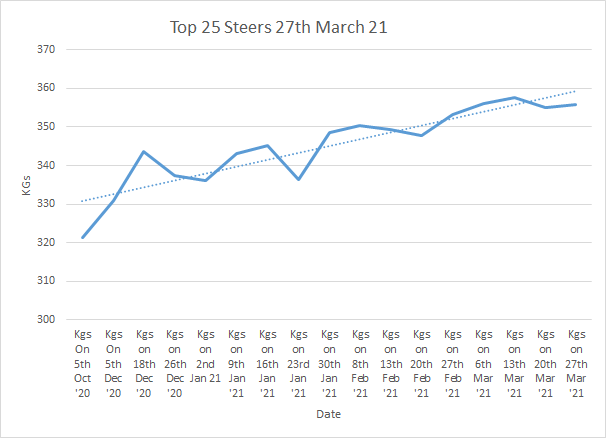
The cows have come through the dry season really well, with only older cows with young calves showing the effects of the dry conditions. We have been giving all of the cows silage, mostly grass, but steers and cull cows have been on sorghum silage to boost their weight. 

Steers herd weights – this is the average for all our steers, from weaners to those ready for market.

The cows have been vaccinated against Foot and Mouth Disease (FMD), and fortunately there have been no bad outbreaks in the area and no cases on the farm. We’ve also vaccinated against Lumpy Skin Disease (LSD), though unfortunately we have still lost a few calves. LSD is a really horrendous disease which presents initially as lumps on the skin and becomes fatal when these lesions spread across the animal’s lungs. Both FMD and LSD are particularly distressing because the cows are clearly uncomfortable, which takes a heavy toll as we take their welfare very seriously. 

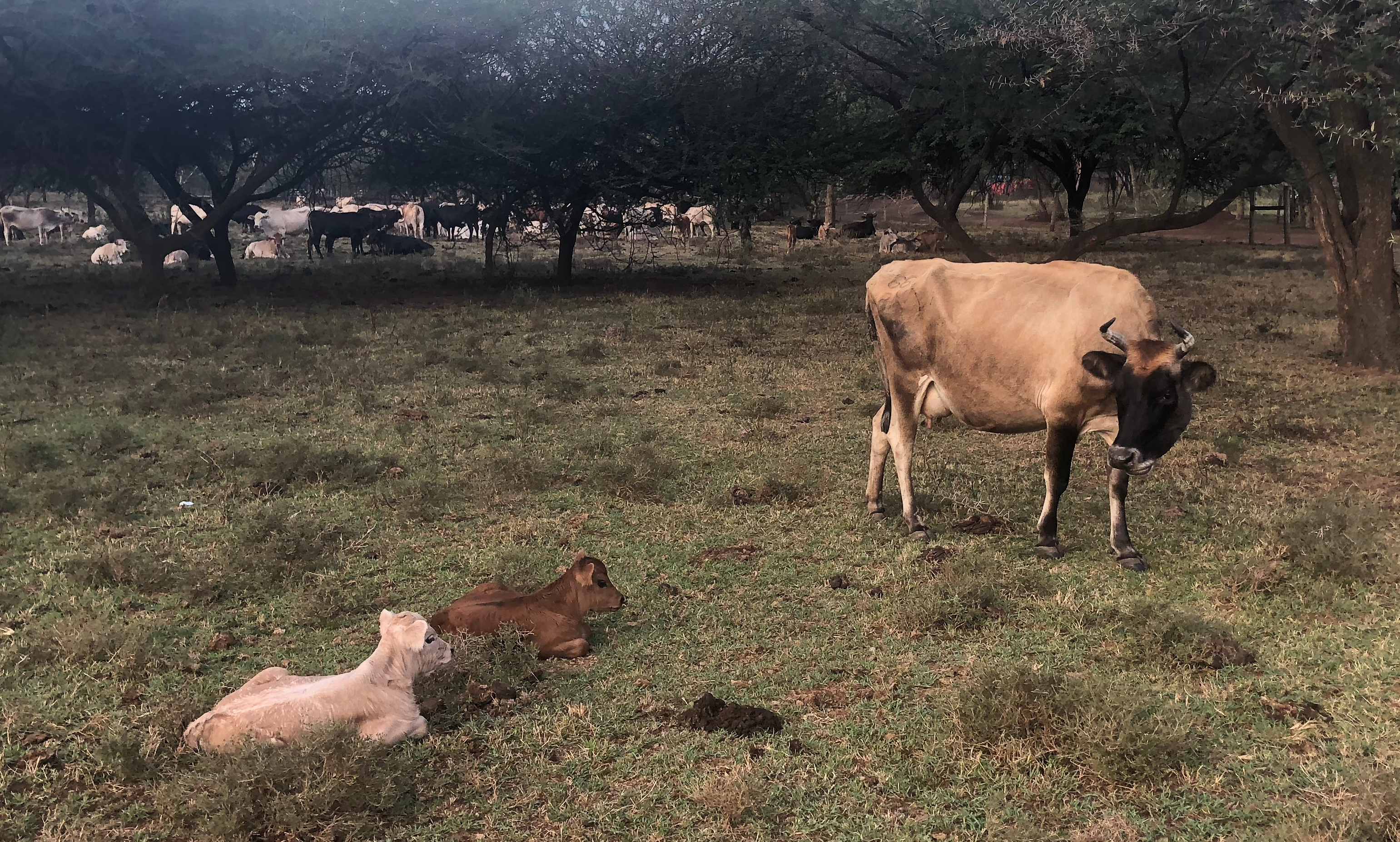
On an exciting note, we had our first ever set of twins on the farm! An older Jersey cow who had been given AI imported Jersey semen produced two adorable young calves who are completely inseparable!

Jersey twins! A first for the farm.

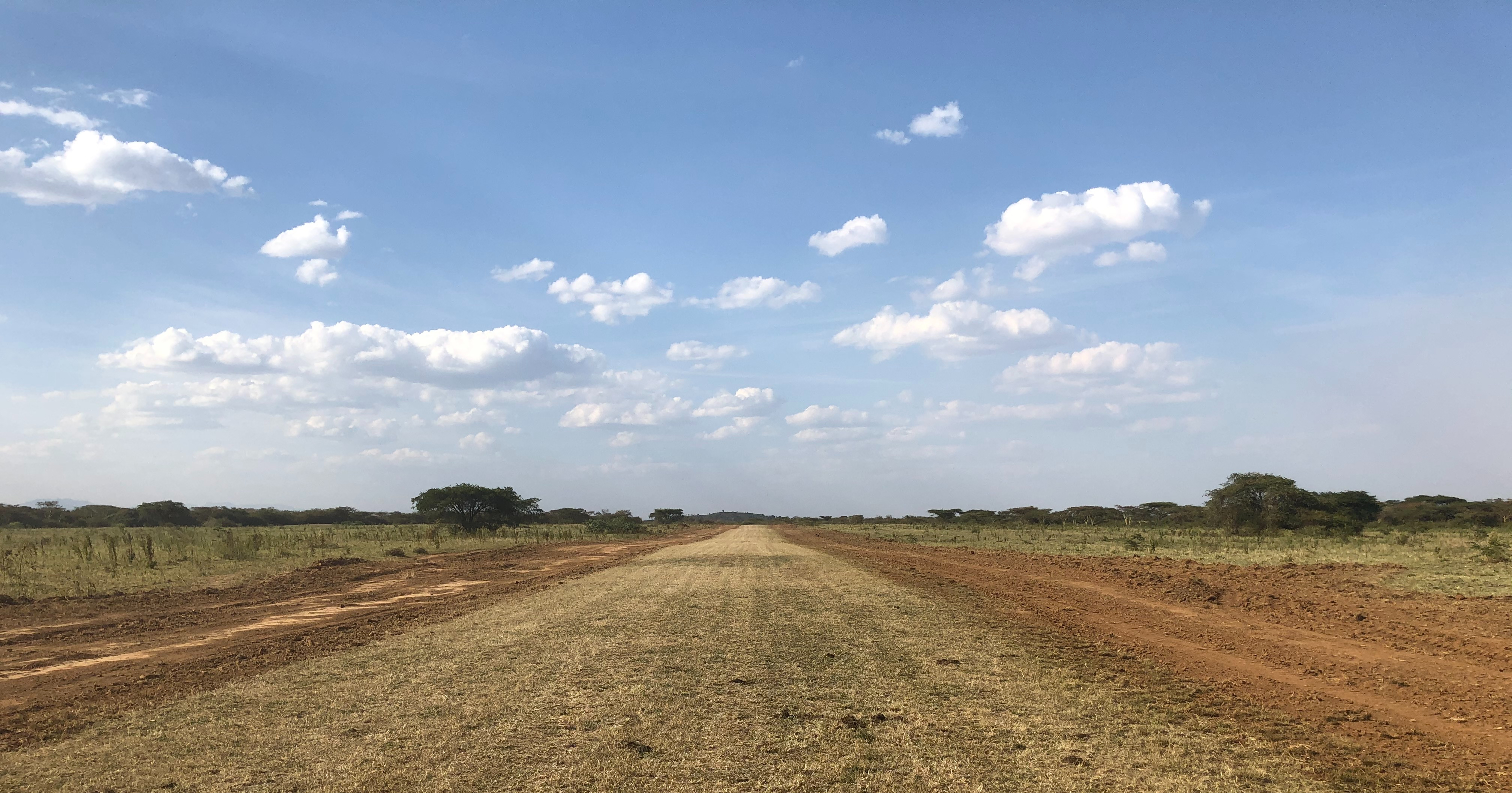
Aside from our usual farm work we have also registered the farms airstrip – Chemeron. The airstrip is now 18m wide and 850m long. Registered private airstrips in Kenya are recognized by the Kenya Aviation Authority, but still require private permission prior to landing.

Newly renovated airstrip.

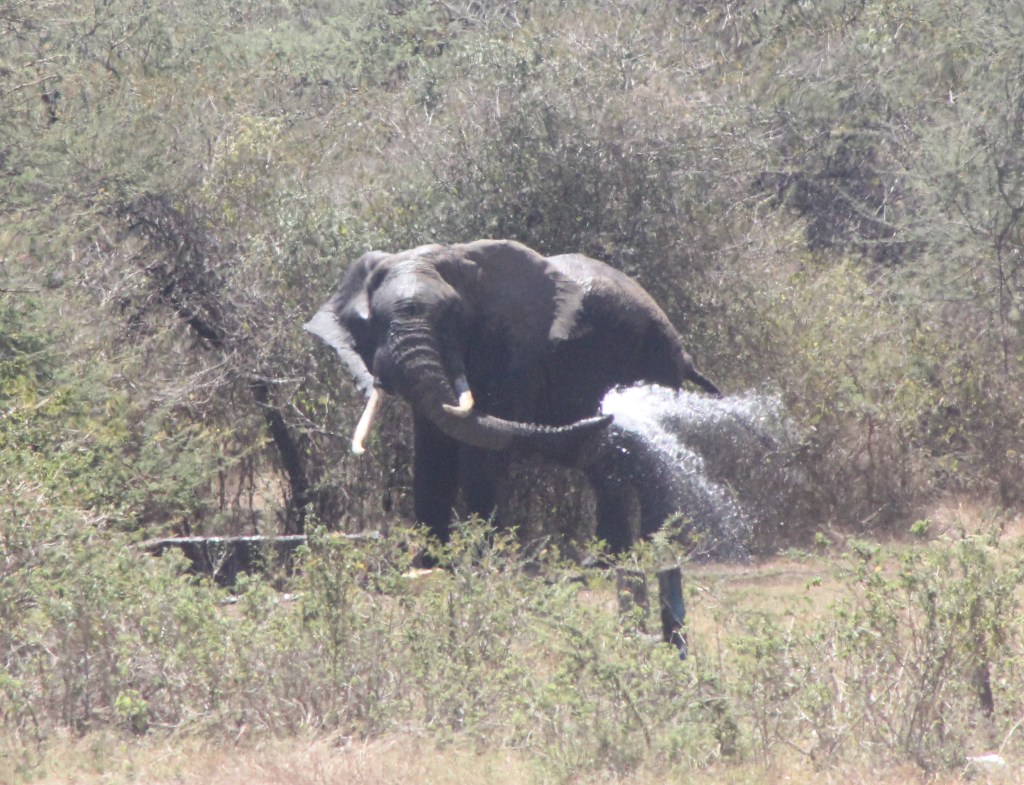
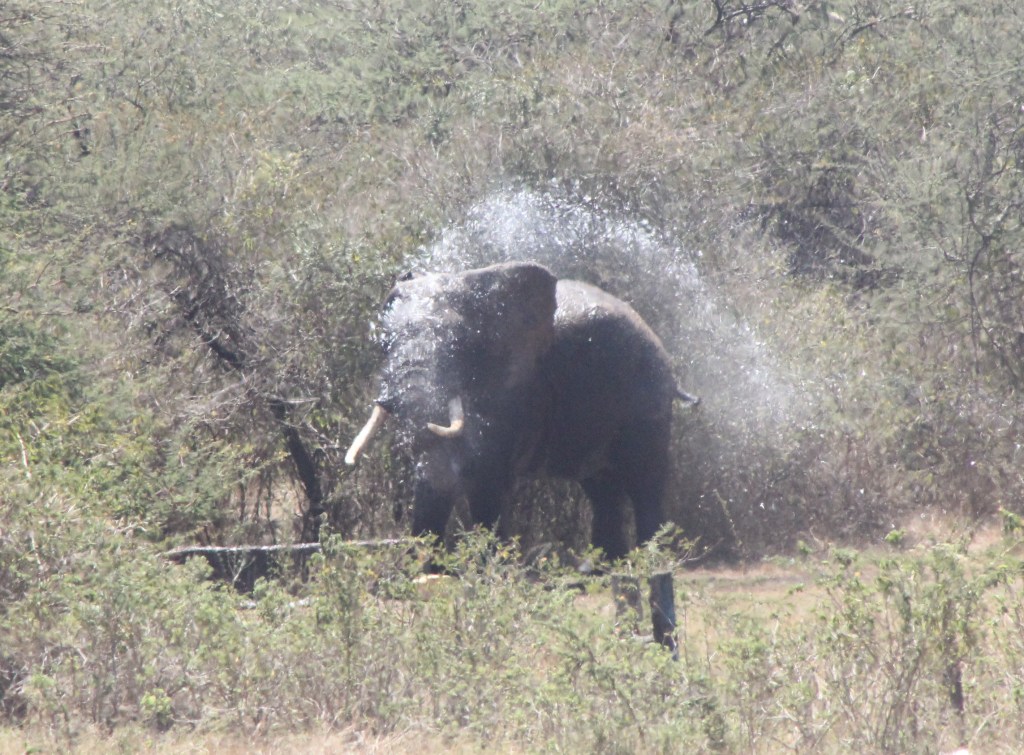
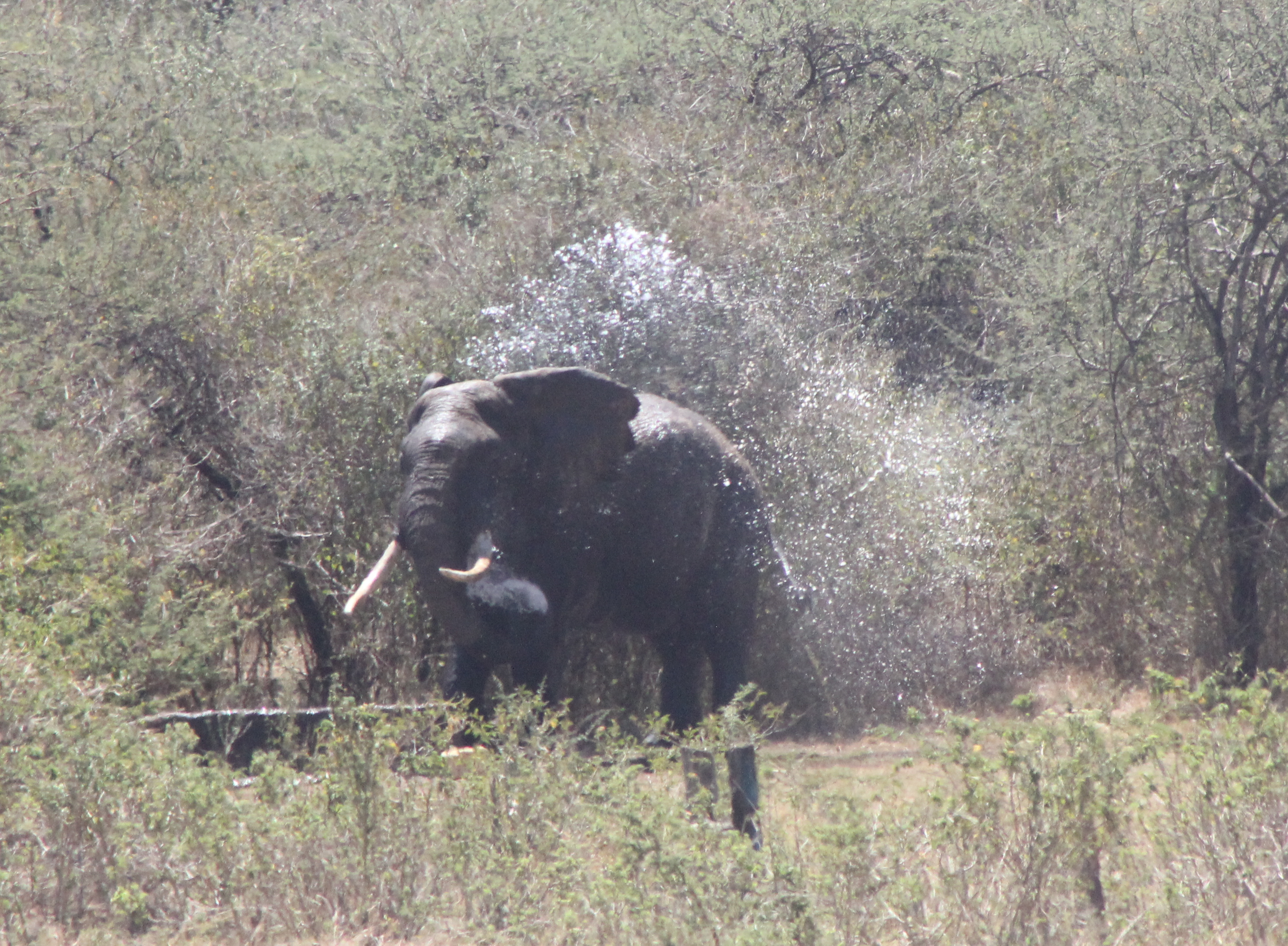
All of this has been going on with the resident elephant in the background. He is destroying fences on a nightly basis, though fortunately the cows are now so used to him they no longer run away and cause extra nighttime havoc. The elephant is also drinking copious amounts of scarce water, and just to show off, throwing a lot more water around as he bathes. 

KWS are aware of his presence, though unfortunately, their attempts to keep him away from cows, fences, and buildings have been unsuccessful. The situation is manageable at present, but will be of real concern if he targets valuable seed crops later in the year. 

Of course we’re all still dealing with the reality of Covid. We’re strictly adhering to all of the government directives and enforcing sanitation and face mask wearing, especially for visitors to the farm such as hay customers. The threat is still with us and we can only be too careful! 

Stay safe and well! 

Fourth Quarter 2020 Update

Starting in October we received short rains, though the farm is beginning to dry out as is customary for this time of the year, while this puts pressure on our grazing, it is an essential part of the natural cyclical rhythm of the farming calendar.

The resident elephant departed in November after having consumed a large portion of maize and sorghum crops intended for silage production for drought time cattle feed. Whenever he departs KWS are informed and they are able to ensure he reaches other protected areas safely.

Crops

This quarter we have harvested Rhodes grass seed and beans, which will now be prepared and packed for sale for the 2021 growing season. 
The Rhodes grass has also been used to produce hay and 270 tonnes of silage. The hay is for sale (click here for more information) while the silage is to be used as cattle feed during the upcoming dry season.

Rhodes grass

Cows

This quarter we conducted our first delivery of beef cattle to Choice Meat. This is the beginning of a new partnership that we hope will enable us to get meat from farm to market as quickly and efficiently as possible, while also minimizing distress for the animals. 

Boran-cross beef cow

Our December calvings set a new high record. 

Looking Forward

Our priorities include improving water security through water harvesting infrastructure, this is key for rain fed agriculture and cattle production. 

Leldet is also a founding member of the Kenya Bean Consortium. The aim of which is to fast track the introduction of bush and climbing bean varieties for commercial release into the local seed market by using a new seed harmonization agreement. If initial trials are successful, new varieties could be available by 2022, these have huge promise given the popularity of similar varieties in other east african countries. 

As we increase our drought resiliency through stored feeds such as silage, we will increase the acreage under Leldet’s hugely successful E6518 forage sorghum. This and other feeds will form the basis of increased efficiency in our beef cattle production.

As always, investments in farm equipment and infrastructure for increased effectiveness and efficiency are on the horizon. These may be financed by newly subdivided plots to the east of the main farm, interest in these plots has grown exponentially over the course of 2020 – please click here for more information.

Covid continues to influence our operations, though by maintaining discipline in sanitation, mask wearing and social distancing we have been able to keep our team safe while staying productive. 

(Covid) Safety First!

We are looking to the new year with hope for a prosperous and happy 2021 for all. 

Stay Safe and Happy New Year 2021!

Third Quarter 2020 Update

Crops

The beans planted earlier this year have come up and are doing exceptionally well, this year we’ve planted KK8, Chelelang and KAT B1, all for seed. These went in at a higher density than usual, resulting in good cover and reduced weeds. We are monitoring these crops closely to ensure they do not suffer from rust or other diseases before they are harvested in October to November.

Beans, to be harvested for seed.

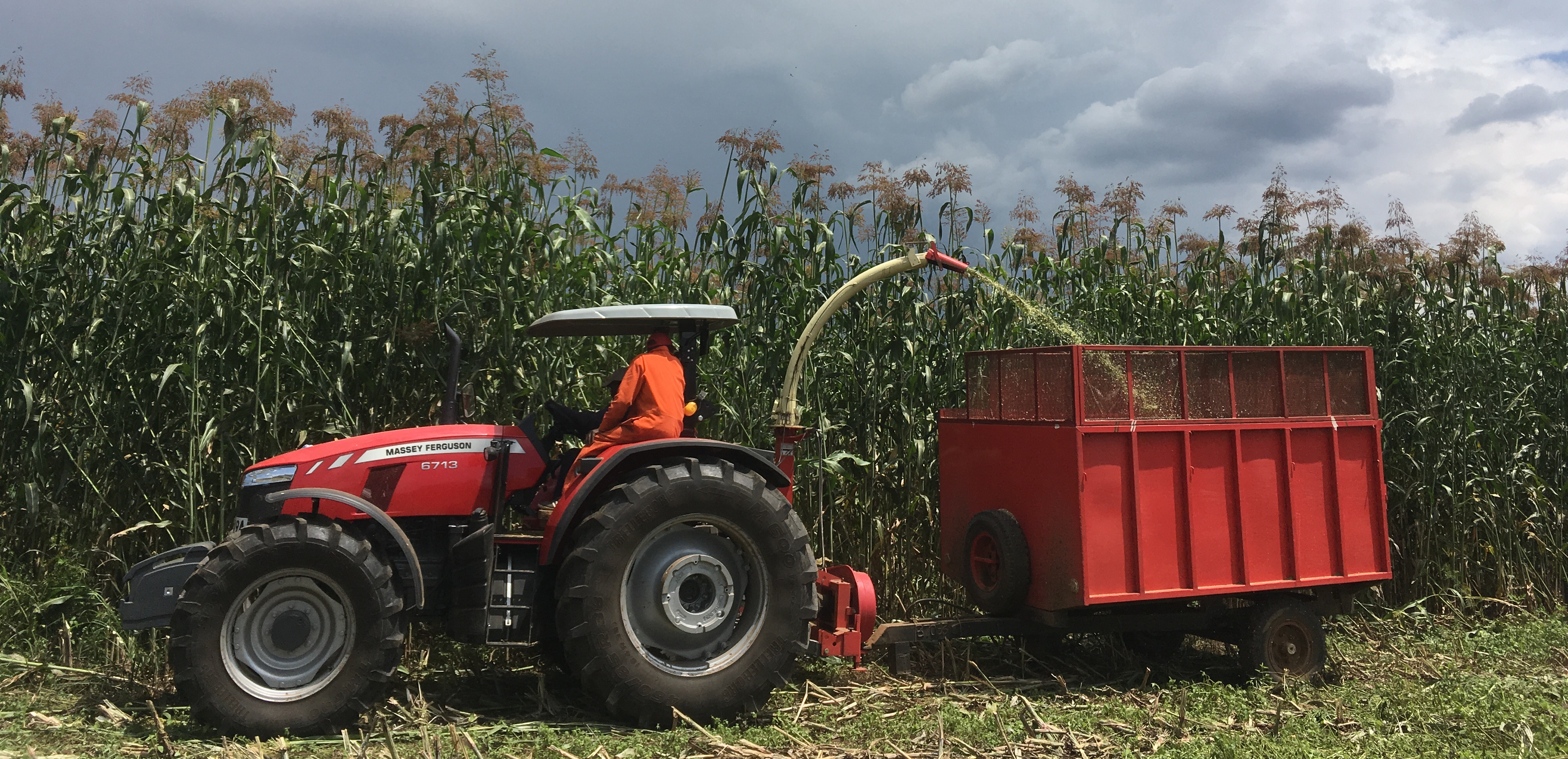
We have taken on a new Massey Ferguson 6713 tractor and a Noguiera silage harvester, this machinery’s inaugural task was to harvest our matured forage sorghum to produce silage for the cattle. On a typical day we were harvesting 40-50 tonnes of sorghum per day, this is made possible by the high biomass density of the sorghum. 

Leldet’s forage sorghum (variety E6518) grows up to 15ft (4.5m).

Massey Ferguson tractor and Noguiera silage harvester at work in our forage sorghum field.

We were also glad to welcome back our Laser tractor, which has been central to farm operations since we started in 1999 and received a major overhaul from FMD Nakuru. Affectionately known as “mama ya shamba”, the laser went right back to work digging the silage hole then compressing the sorghum to maximize the space of the hole and minimize oxidation in the fermentation process.

Our laser, “mama ya shamba”, compressing silage.

One challenge faced during this harvesting was our resident elephant, who has been enjoying the sorghum, particularly as he is able to hide within the crop – no small feat as he is particularly large! We are grateful for the support from KWS Nakuru, who enabled us to harvest the sorghum without the fear of a confrontation between harvester and elephant!

The resident elephant making a dash into the sorghum.

In preparation for the short rains we constructed a “shakorator” – a device with a few tines, designed to rip the soil to a depth of approximately 2 – 3 feet in order to aerate the soil and enable water to penetrate the compacted surface. This is a key step in restoring the soil’s productivity after it has been grazed by livestock.

Working to improve soil structure and health.

Seed

Sales of beans continue to be strong in Bomet and Kericho counties, we have been receiving images and feedback from farmers, and as part of our after sales support have been following up with any issues and assisting with trouble shooting where crops have underperformed. Information and images will be posted to our “Farmer Diaries” page (coming soon). 

Our most recently sorted and packed lots of seed continue to show excellent quality, with germination tests conducted by KEPHIS consistently above 95%. 

Livestock

We have been fortunate over the last few months to have not faced any heavy disease burden, with only mild issues from the Lumpy Skin Disease (LSD) outbreak in the region. the cows and sheep are healthy and putting on weight. The steers are grazing a Rhodes grass field during the day and provided with Rhodes grass silage in the evening.

Steers enjoying silage after a day of grazing

Covid-19

We are continuing to enforce the sanitation measures introduced at the beginning of the pandemic, including through production and dissemination of Leldet and Chemeron branded masks.

The team in August 2020.

Second Quarter 2020 Update

The Chemeron and Leldet team!

Weather:

We received 382 mm of rain in April, May and June, which is higher than average so the farming is looking very verdant, especially after the exceptionally mild dry season. The total rainfall for 2020 so far is 510mm.

Crops:

April and May is planting season, so we’ve been busy planting beans (Chelelang and KK8), Boma Rhodes grass and forage sorghum (E6518). 

Weed control this year has been a challenge because of all of the rain we’ve been having. 

The part time resident elephant demolished some of the sorghum, but luckily he took his leave before he could cause too much damage.

Beans coming through.

Seed:

Sales of beans have been strong in Bomet and Kericho counties as everyone makes the most of the rains. Each season demand for Leldet beans grows as more people learn of, and value, the reliability and quality of Leldet seed.

Livestock:

The sheep have moved into a new mobile boma. This will reduce disease spread between cattle and sheep, particularly of Blue Tongue and Rift Valley Fever which are both devastating for calves. 

The annual livestock review was conducted in May, giving us a chance to update records and continue to curate exceptional herds of crosses and pure boran. 

The steers are as always getting the best of the grazing, this is supplemented by high protein farm-made feed made from sorghum, maize and bean waste from last year, so that they really pack on the kilos. 

Our two-cluster milking machine has been commissioned and will come into full service once ongoing upgrades to the diary have been completed. 

Angus-Charolais cross cow coming through the spray race.

Covid-19:

Covid-19 has thrown new challenges at the farm and our staff have continued to be exceptionally proactive, professional and responsible. All of the necessary safety and sanitation measures have been enforced, and we’ve been able to continue to be productive and support our employees through this difficult period. 

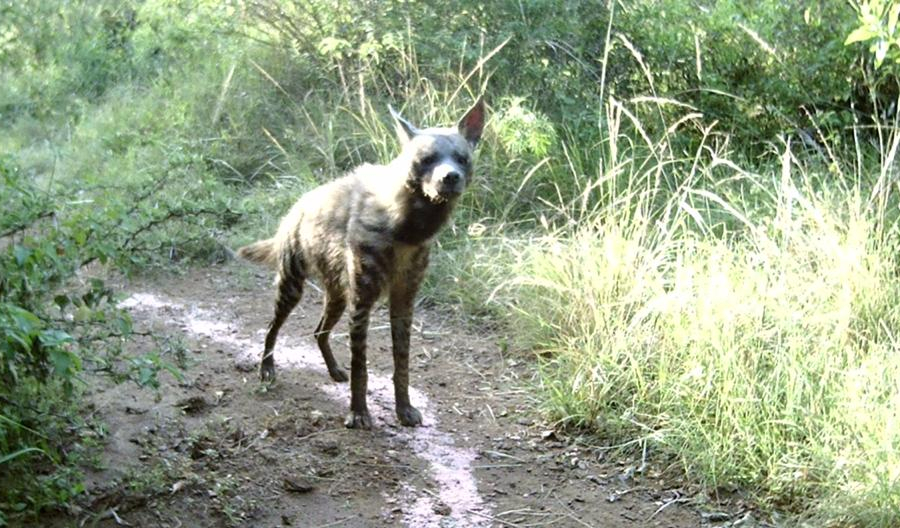
One positive outcome has been that Harry and Elliot have been able to spend more time on the farm due to school closures. Not only have they been very helpful taking on everyday farm jobs, they’ve also been deploying more camera traps, and we’ve been pleasantly surprised by all of the wildlife activity. Elliot has managed to capture some exceptional images!

Striped hyena